
Why the smartest financial decision is sometimes leaving revenue on the table
One of my clients owns a successful insurance agency. He’s spent years building a business that runs well, supports his team, and gives him something most business owners are still chasing: freedom.
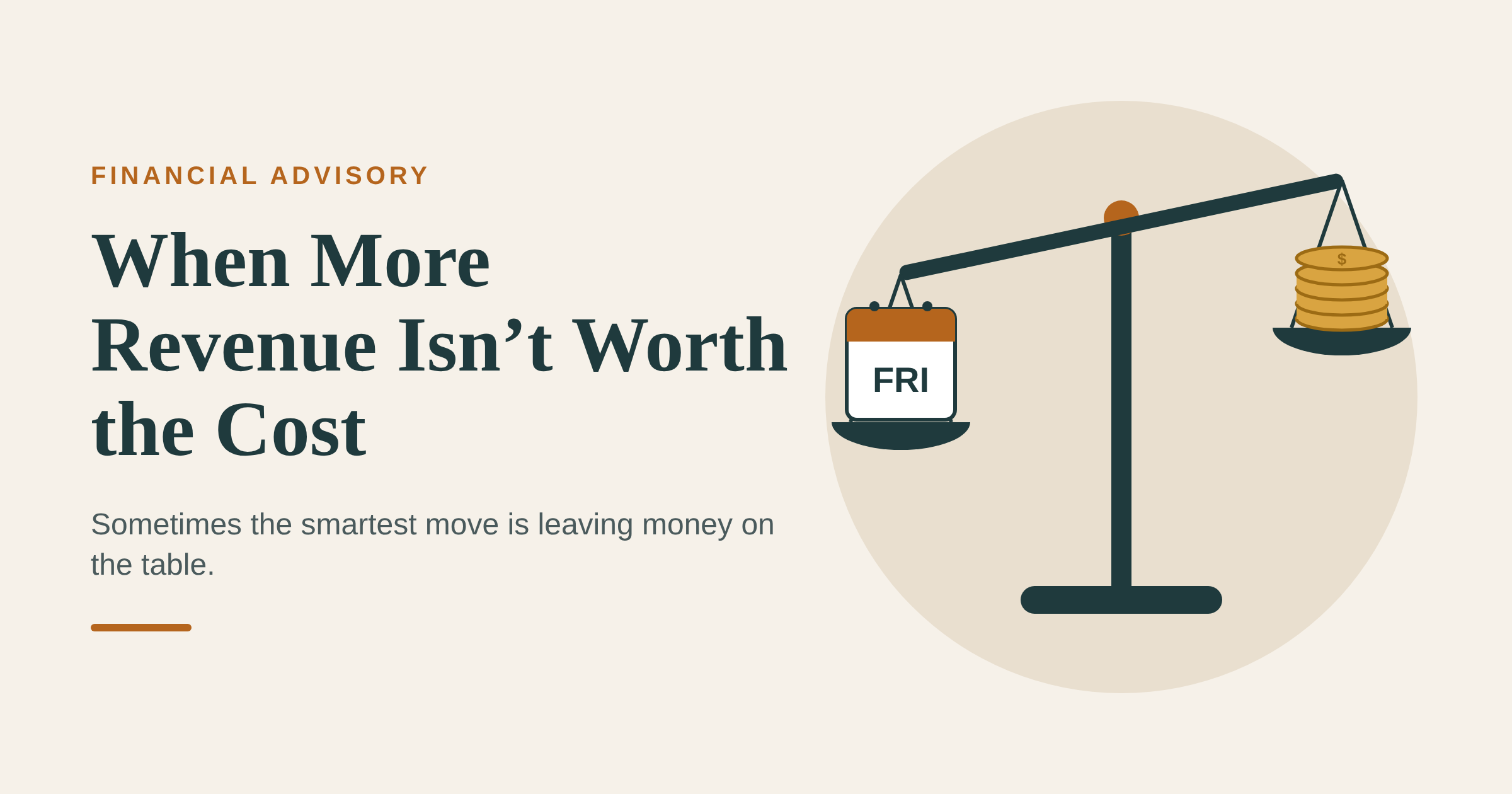
Most Fridays, he doesn’t work. That didn’t happen by accident. He built the business that way, and he protects that time.
Now compensation models across the insurance industry are changing, and agents are under more pressure to hit production targets.
He could go after every target and protect more of his compensation. But that would mean spending more on advertising and leads, possibly hiring more people, and taking back more of the day-to-day work himself.
If you look only at revenue, the answer seems obvious: hit every target and collect every dollar.
But revenue wasn’t the only thing at stake.
The real cost wasn’t on the P&L
As we talked it through, it was clear he could probably hit the targets across his agency. The real question was what it would cost him personally.
Chasing every dollar meant more stress and more of his time. His business already produced enough income, and he wasn’t willing to trade away the freedom he’d worked so hard to build.
So he made a choice.
He’d go after the opportunities that still made sense and do those well. When earning more would take more than he was willing to give, he’d leave the money on the table.
That isn’t a failure to grow. It’s a decision about which growth is worth having.
What are you trying to build?
At some point, every business owner has to decide what kind of life the business is supposed to support.
Growth is exciting, but it’s never free. It takes money, people, advertising or your time, and usually some mix of all four. Before you chase the next opportunity, decide how much of those you’re willing to put back into the business.
For this owner, the goal was never the biggest agency possible. He wanted a stable, profitable business that protected his freedom. He was willing to earn a little less if earning more meant giving up the time and quality of life he’d fought for.
Once that’s clear, the question changes. It’s no longer “How much more can the business make?” It’s “What will it take to make more, and am I willing to pay that price?”
Put a number on the decision
Once we knew what he wanted the business to provide, we could find the number that mattered.
We talked through how much time and money he was willing to put back into the business, and how much profit he was willing to give up to protect his freedom. Then we set a clear number to watch so we’d know when it was time to act.
Now we don’t react to every bad month or every industry shake-up. We watch the trend, and I’ll let him know when he’s getting close to the point where he may need to act.
When that happens, he decides. He can make changes, or he can accept earning a little less because his quality of life is worth it. Either way, he’ll be making a clear choice, not reacting in a panic.
Advisory isn’t always about making more money
Good financial advisory doesn’t always mean pushing an owner toward the highest possible revenue or profit.
Sometimes my job is to help an owner see what an opportunity will really cost, decide what they won’t give up, and set the number that tells us when it’s time to act.
That’s not settling. It’s knowing what you want your business to provide, and using the numbers to protect it.