

If you’re serious about fixing the problems in your business, then you are already reframing how you look at your business. We already discussed “good business instincts” and their inexistence… but how do we go from that to a critical problem-solving tool?
To understand that, we first must discuss popular 1940s psychology: Maslow’s Hierarchy of Needs.
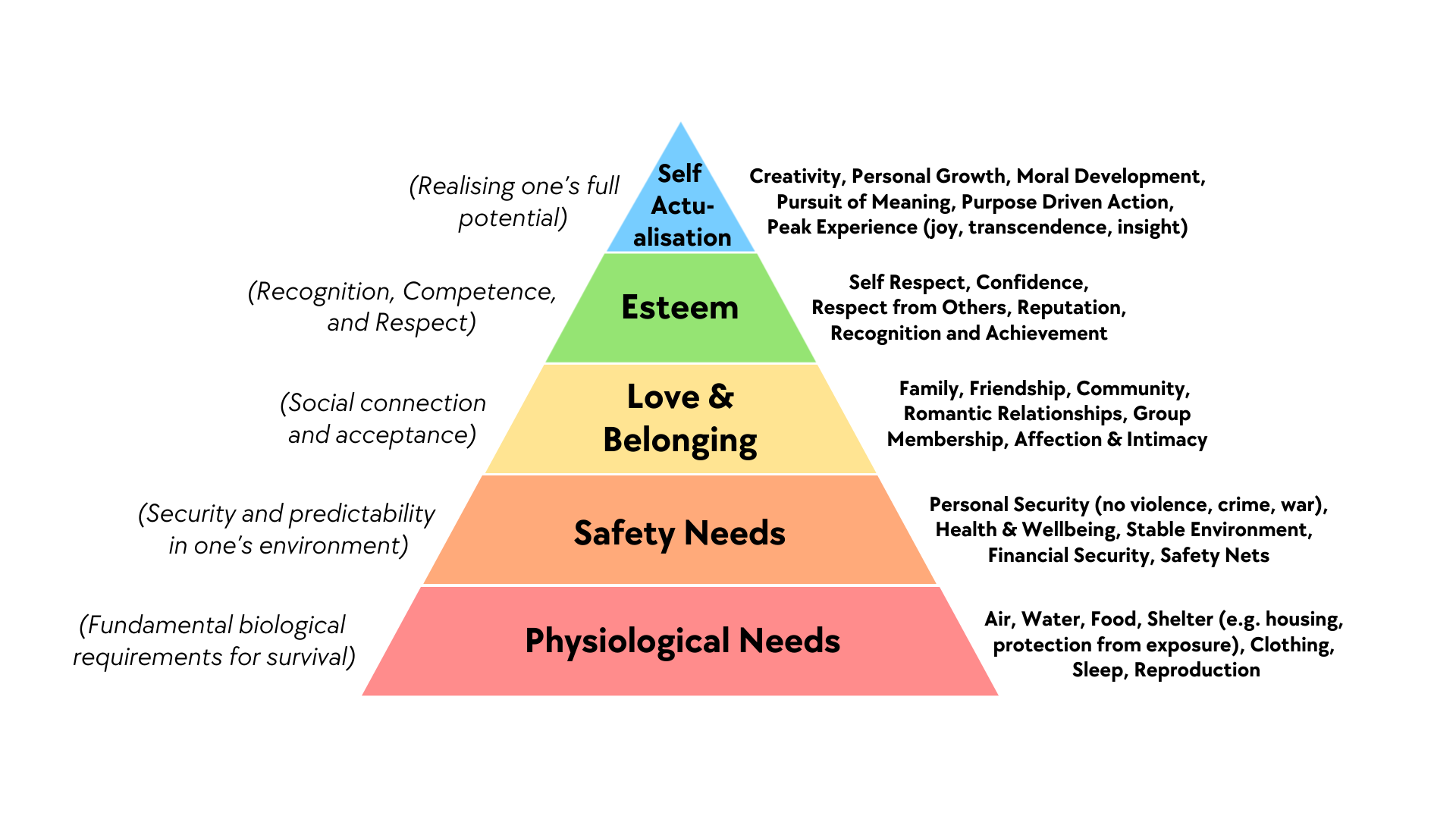
Maslow’s Hierarchy of Needs is pretty straightforward. We all are motivated by each of these five levels, and the width of the level determines how badly we need that level. For example, imagine you are running a multi-billion-dollar business and are living the life of your dreams. You’re part-timing running life-saving charities and have a side gig of going to space. All of that comes crashing down the second you start choking on your gold-tipped salmon roe ice cream—because your physiological needs come first.
Businesses work fairly similarly. However, the pyramid looks different.
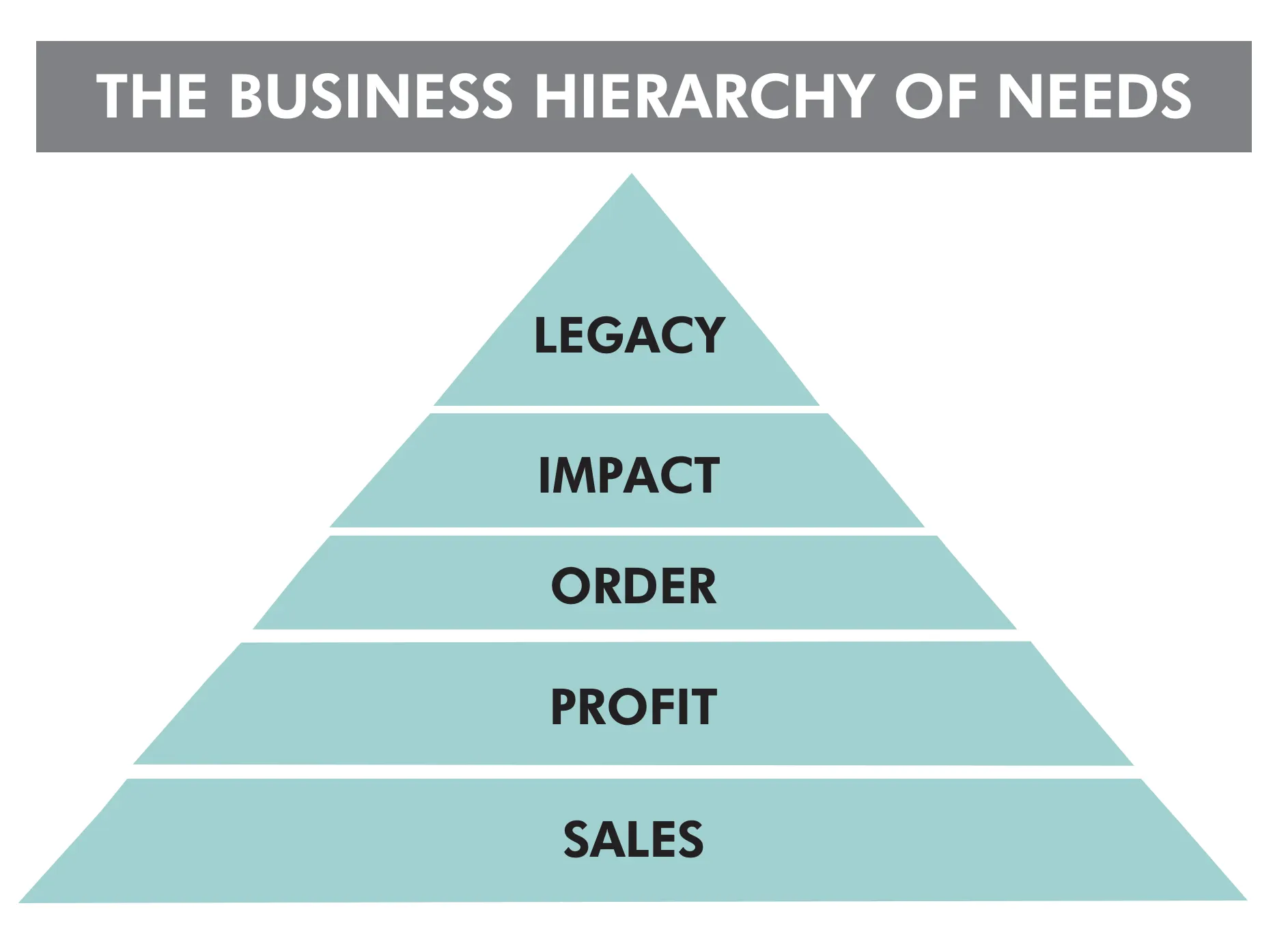
Image from Michael Walmsley
Your business is always going to want sales, profit, order, impact, and legacy—but in order to have any of that, you need money coming through the door, right? It would be pretty difficult to run a business that doesn’t have any revenue. Let me give you a basic rundown of each level.
Interpreting the Business Hierarchy of Needs
Sales:
Sales sit at the base of the pyramid because if you don’t have sales, you don’t have a business. However, we’re not looking for increasingly more sales; we’re looking for consistency and quality sales. Later this year, we are excited to introduce you to David Cowan, who helped us develop our sales strategy.
Profit:
Now, if you’ve read our work before, then you know we specialize in this area. Profit is a vital step to erase debt, keep a healthy margin, gain leverage to expand your business, and fill up a reserve of cash for market downturns. Profit allows you to stop living sale-to-sale and instead view your business as a designer.
Order:
The fundamental truth of business is that you must deliver on what you sell. Order is all about managing your team and ensuring your business delivers on what you are selling. We recommend checking out https://sooterconsulting.com/analyzing-your-4d-mix/ and https://sooterconsulting.com/run-like-clockwork-whats-your-queen-bee/ to find out more. Additionally, we are excited to interview several professionals later this year who help you create order in your business.
Impact:
This is where your business needs are less tangible. How do we track the impact your business is making on the world? A business that is meeting its need for impact is benefiting a client beyond the transaction. It means your team is motivated by the mission behind your business. It means members of your team are achieving their dream careers, and that aligns naturally with the success of your business. It means you are receiving vital feedback that is both critical and complimentary, and it means you can collaborate with other vendors (even competitors) to better serve customers.
Legacy:
Then we have legacy, easily the least realized business need, because it means your business will need to live on after you move on. In a way, legacy is a lot like raising a kid. At some point, you will simply need to trust that the business has a strong enough foundation. One metric to track legacy is your clients, both past and present. If you have clients who openly promote, defend, and support your business, then you are creating a legacy. If your business has a clear vision that can be adjusted quarterly, that’s a healthy legacy. And if you have a plan in place to transition leadership, that’s another healthy legacy metric.
Businesses have a lot of needs, and each level becomes less tangible to measure. Thankfully, it’s still a pyramid, and as long as you have a healthy flow of sales, your business is positioned well to tackle the next problem. The next time you ask, “How do I fix my business?” try locating the problem your business is facing on the pyramid and fix that. Stay tuned for deep dives and interviews with other professionals this year as we discuss each of these layers of the business hierarchy of needs.